
Thalagam, also known as “Ezhukari Kootu,” is commonly made on festival days like Thiruvathirai and Pongal. It is also referred to as “Pongal Kootu.” This dish is a medley of seven vegetables and is traditionally served with Thiruvathirai Kali.

Thiruvathirai Kali
Difficulty: MediumLearn how to prepare the traditional South Indian dish “Thiruvathirai Kali” and the modern techniques to make it even easier. Serve it with delicious Mixed Vegetable Kootu for a complete meal.
How to make Thalagam
Thalagam is a flavorful South Indian dish made from a combination of vegetables, tamarind, and split pigeon peas (thuvar dal). To prepare, start by soaking tamarind in water and extracting the juice. Cook the dal in a pressure cooker until soft. Then, chop your choice of vegetables. Cook them with turmeric, sambar powder, and salt in a heavy-bottomed vessel until they are tender. Add the tamarind water and bring it to a boil, followed by the cooked dal.
In a separate pan, fry dal, chili, coriander seeds, and rice in oil until aromatic. Then, blend them with coconut to form a smooth paste. Incorporate this paste into the boiling mixture, stirring well. Finally, create a seasoning by tempering mustard seeds in oil. Add curry leaves. Then, add this seasoning to the Thalagam for an extra burst of flavor. Serve this delicious dish warm, perfect with rice or roti.
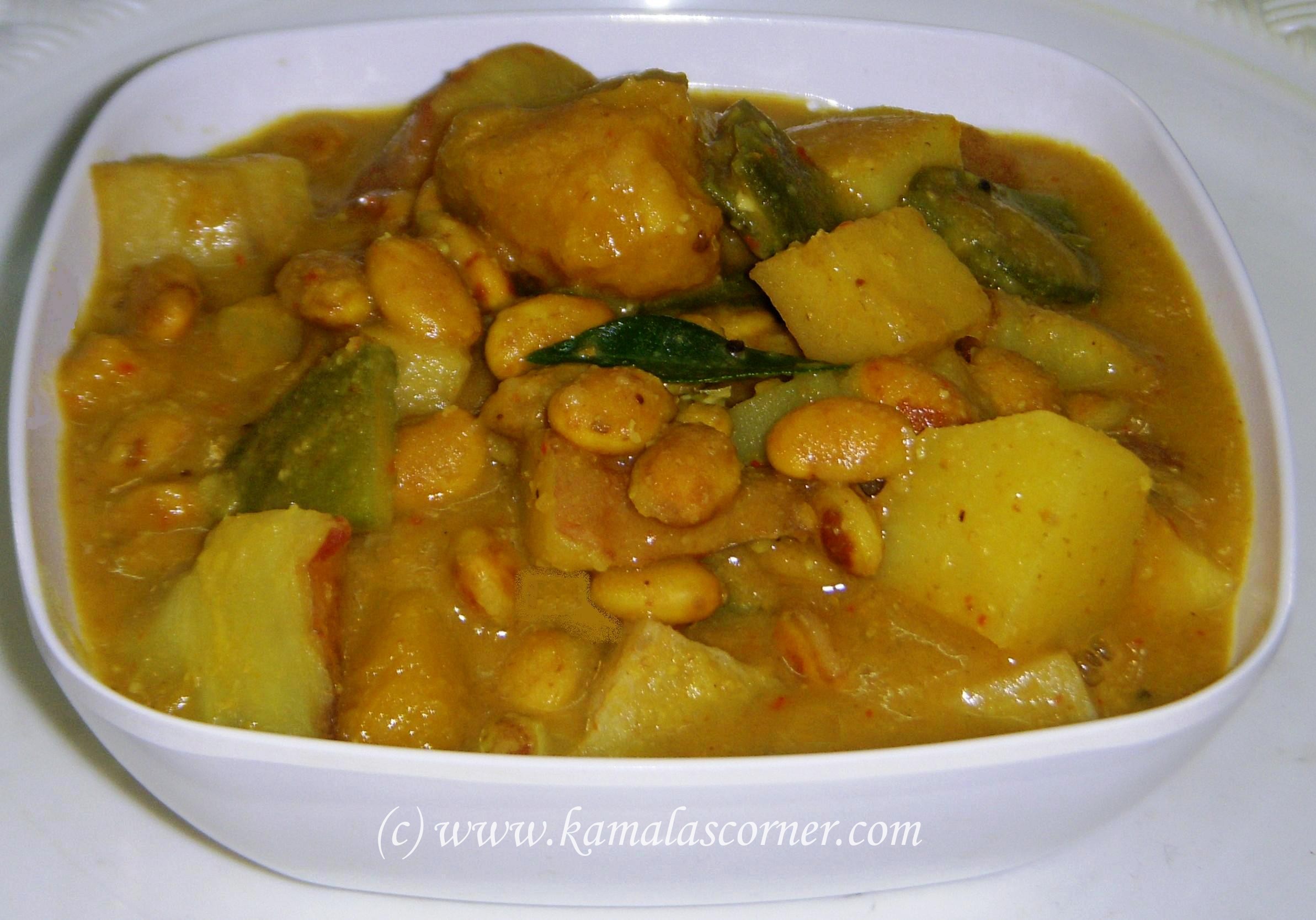

Thalagam
Learn how to make Thalagam, a delicious South Indian dish made with 7 vegetables. Perfect for festival days like Thiruvathirai and Pongal!
8
servings10
minutes20
minutesIngredients
Sweet Potato – 1
Green Pumpkin – a small piece
Broad Beans – 5 or 6
Potato – 1
Yam – a small piece
Green plantain – 1/2
Green Mochai Kottai – 1 cup
Thuvar dhal – 1/2 cup
Tamarind – gooseberry size
Turmeric Powder – a pinch
Sambar powder – 1 teaspoon
Salt – 2 teaspoon or as per taste
- To fry and grind:
Bengal Gram dhal – 1 teaspoon
Red Chili – 4 to 5
Coriander seeds – 1 teaspoon
Coconut gratings – 2 tablespoons
Rice – 1/2 teaspoon
- For seasoning:
Oil – 1 teaspoon
Mustard – 1/2 teaspoon
Curry leaves – few
Directions
- Start by soaking tamarind in water for a while, then hand-squeeze to extract the juice. Set this tamarind water aside.
- Cook thuvar dal (split pigeon peas) in a pressure cooker until it’s soft and mushy.
- Cut your choice of vegetables into medium, bite-sized pieces. Place these vegetables in a heavy-bottomed vessel. Add turmeric powder, sambar powder, and salt. Pour in enough water to cover the vegetables. Cook over medium heat until the vegetables are tender.
- Pour the tamarind water into the vessel with the vegetables and bring it to a boil.
- Once the tamarind water is boiling, add the cooked dal to the mixture, stirring well.
- Meanwhile, in a separate pan, heat a teaspoon of oil. Fry the dal, chili, coriander seeds, and rice until aromatic.
- Add coconut to the fried ingredients and grind everything to a smooth paste. You add a little water to help grinding.
- Add this ground paste to the boiling mixture of vegetables, tamarind water, and dal. Stir everything together until well mixed.
- For the seasoning, heat a little oil in a small pan. Add half a teaspoon of mustard seeds and a few curry leaves. Once the mustard seeds start to pop, add this tempering to the gravy.
thank u v much. just in time for tomorrow’s thiruvadhirai.
Thank you Jay. Hope you have tried this kooty for Thiruvathirai.
Thank you….ur receipes r easy and very nice….
thanks again.
Thank you kamala. have been searching for a yummy vegetable kootu n hv found it here. yr recipies r simple and nice. thanks .
Thank you Sukanya. This is the season we get lots of vegetables. We have to utilise this opportunity to include more vegetables in our dishes.
thanku very much.i am a great fan of you and your site.
hi kamala .This is first time iam openin u r website.
I am findin different variety of kootu,but now only i got.It was very nice.Everybody in my family liked it a lot
Thanks a lot.
Bi Parvathy/11.20A.M
Hi Parvathy,
Welcome to my site. Hope you will try more recipes and post your comments.
Pingback: Exciting Thiruvathirai Festival Celebrations on January 3, 2026